Open Roles
EN
- English
- DEUTSCH
- SPANISH
- FRENCH


Tyndall National Institute is an international leader in semiconductors, photonics, and deep-tech research and innovation. As a leading collaborative European research institute, Tyndall is a key actor and hosting partner in the delivery of the EU Chips Act and is central to the delivery of Ireland’s ‘Silicon Ireland’ National Semiconductor Strategy.
Tyndall is Ireland’s leading research and innovation organisation and the national focal point for excellence in deep-tech research, development, and graduate training. We operate at the convergence of nanotechnology, microelectronics, photonics, electronics, and AI. The Institute is globally recognised for pioneering digital technologies, particularly as applied to Information & Communications, Health & Life Sciences, Agritech & Food Security, Energy and Climate Mitigation, as well as emerging fields such as quantum technologies and other novel computing paradigms.
Established in 2004 as a strategic partnership between the Irish Government and University College Cork (UCC), Tyndall builds upon the historic legacy of the National Microelectronics Research Centre (NMRC), founded in 1982. A critical national research resource and key infrastructure asset, Tyndall connects world-class research directly with industry, enterprise, and an emerging indigenous semiconductor sector characterized by record commercialization and spin-out success.
Central to Tyndall’s mission is delivering profound economic and societal impact through research excellence in partnership with industry and academia. Backed by a major €100 million expansion investment under the Government of Ireland’s INSPIRE programme, Tyndall is entering its most ambitious era of growth yet. Guided by the Tyndall Strategic Plan 2030, the Institute is set to more than double its physical footprint with a new 17,500 square metre state-of-the-art facility at its Cork headquarters, alongside expanding Dublin research operations and establishing new national research collaborations across many sectors.
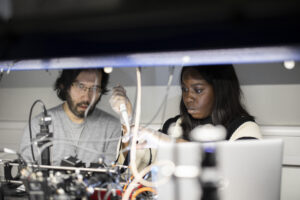

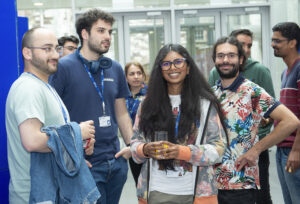
To support these breakthrough capabilities, the Institute’s community is rapidly growing to reach 1,000 people by 2030, including 250 PhD students. Research excellence remains at the heart of everything we do. Our sustained success relies entirely on our talented research staff, professional services teams, and postgraduate students who are laying the foundation for global technology achievements up to and beyond 2030.
Tyndall’s expansion is also supported by recent national and EU funding wins for significant (M€10’s) additional research equipment across a range of areas such as semiconductor processing, materials analysis and microscopy, quantum technologies, heterogeneous integration and advanced packaging, ultra-high speed optical communications and RF through THz characterisation. A substantial research start-up package is available for the successful candidate.
Tyndall is seeking to appoint a Chief Scientist to provide overall research leadership for the research activities across the Institute. The key focus of the Chief Scientist will be to drive research excellence across the Institute and to optimise both bottom-up and top-down research strategy and execution. The Chief Scientist will also develop the international distinction and reputation of the Institute and help attract and develop research talent at all levels.

The Chief Scientist will have a substantial research track record in a discipline relevant to the Institute (such as Physics, Engineering, Chemistry, Materials Science or Computer Science) and will be expected to continue to be an active researcher (minimum 40% of time) consistent with an underpinning permanent academic Professorship to be held within an appropriate School at University College Cork. The Chief Scientist will be expected to contribute to the academic mission of the School: research student supervision would be warmly encouraged.
The successful candidate will be responsible for, but not limited to:
Institutional research strategy and execution.
Institutional research excellence.
Optimising cross-institute collaborations.
Maximising cooperation with UCC academic units.
Development of strategic academic partnerships across the Island of Ireland.
Establishing International Research Partnerships.
Encouraging the generation of formal IP or other forms of commercialisation. including the development of spin-out companies.
Research Governance and policy matters.
The Chief Scientist will:
Report directly to the Tyndall CEO as a member of the Institute Executive Leadership Team.
Line manage Tyndall Research Directors and the Head of Graduate Studies.
Chair the Institute Research Committee.
Deputise for the Tyndall CEO as required.
Lead and manage their own research team and activities at an internationally recognised level.
Colloborate and engage with Vice President for Research and Innovation, and the Head of College of Science, Engineering and Food Science, UCC.
Internationally recognised research leadership and distinction in a topic of core relevance to Tyndall.
Successful strategic leadership and development of research activities beyond own group or team.
Strong evidence of nurturing and developing successful research leaders including transforming early career researchers into independent research leaders.
Experience of direct line management of independent researchers or academics where appropriate.
Successful track record of securing research funding at scale.
Demonstrable ability to work on an interdisciplinary or multidisciplinary basis.
Internationally recognised prizes, awards or fellowships.
Track record of direct industry funding for research activity.
Experience of successful technology transfer such as IP licensing or spin-out company creation.
Development of academic research or educational partnership.
A National Leader in Talent Development: Tyndall is committed to attracting, developing and retaining exceptional talent, strengthening Ireland’s semiconductor ecosystem and global competitiveness.
Accelerating Careers: We offer clear career pathways, world-class research environments and opportunities for professional growth, leadership and meaningful impact at every career stage.
A Culture of Excellence and Innovation: We foster an inclusive, ambitious and high-performing environment that champions collaboration, entrepreneurship, innovation and scientific excellence.
Developing Future Leaders: Through investment in people, leadership and skills development, we empower talent to thrive and shape the future of research, industry and technology in Ireland and beyond.
Duties of the Post
In accordance with the University’s strategic objective as a research-led institution, the duties of all academic staff will include research, research-led teaching and contributions to the university, the discipline and the community. The academic staff member shall teach and examine, undertake administrative duties and carry out other duties appropriate to the post under the general direction of the relevant Head of the School of /Head of College.
The roles and responsibilities outlined below are to be interpreted in the context of the relevant Statutes and where there is any difference arising from interpretation, that statutory provisions take precedent. For the sake of clarity, the relevant elements of the statutes not already incorporated in the numbered sections are appended in italics under each subheading.
Leadership
Demonstrate academic leadership through teaching, research and scholarship, and in any other appropriate manner.
Mentor, support and advise junior staff as appropriate and assist in their academic career development in teaching and research and foster the research and scholarship of other individuals and groups within their academic unit and the University.
Research
Engage in productive research and scholarship and contribute to the advancement of knowledge in the relevant discipline and publish research in appropriate peer-reviewed publications, creative works or other forms of scholarship appropriate to the relevant discipline.
Carry out initiatives in generating research income and assist in the co-ordination of research funding activities within the discipline and school, as appropriate to the relevant discipline.
Supervise students undertaking research projects (especially at PhD level).
Engage in other scholarly activities relevant to the related discipline.
Teaching & Examining
Promote excellence in teaching and learning and encourage the application of innovative teaching and learning methodologies within the relevant School and within other academic units in the University, as appropriate.
Teach and examine on courses at undergraduate and postgraduate level and, where appropriate, adult and continuing education courses and make a distinguished personal contribution to teaching at all levels.
Supervise undergraduate and postgraduate students.
Contribute to, and take a leadership role where appropriate in, the regular evaluation of curricula, and the development of new curricular initiatives.
Perform a significant role in the development of postgraduate studies in the School and at UCC.
Lead in the maintenance of academic standards and in the development of the curriculum within their subject areas.
To give the students attending their ordinary lectures assistance in their studies, by advice, by informal instruction, by occasional and periodic examination, and otherwise, as they may judge to be expedient; also, to make such arrangements as they see fit to make to meet students who have individual queries.
To give instruction to their students and assist them in the pursuit of knowledge.
To hold, or assist at, all University examinations in the subjects with which they are an examiner.
Contributions
Strategically advance the discipline by taking new initiatives to promote income generation and enhance recruitment.
Promote the discipline both inside and outside the University and contribute to the overall intellectual life of the University and society.
Serve if required as head of one of the College’s academic units subject to relevant University regulations, statutes and management requirements.
Develop links with professional bodies and external agencies, where appropriate.
Contribute to the administrative duties of the discipline/school/college and to act as a member of such committees as may be required within the university.
Fulfil other duties appropriate to the post as may be assigned by the Head of School/College.
Carry out other duties as may arise as identified in the University statutes.
To carry out administrative and other appropriate duties lawfully allocated to them within their department or other academic unit.
If a member of the Academic Council, to attend its meetings.
To serve upon all the committees to which they may be appointed by the Governing Body or the Academic Council, and to assist and co-operate with the Governing Body in such other reasonable ways as the Governing Body may prescribe, for the maintenance of discipline and good conduct among the students, or for the general business of the University.
The above listing is not exclusive or exhaustive and the post holder may be required to undertake duties as may reasonably be expected. All staff are required to be flexible, co-operative and professional within the needs of the post and the Discipline/Department/School, College and University. The University is undertaking a major reform of its internal structures which may necessitate possible future changes in the organisation of its activities.
Health & Safety
In addition to the statutory safety duties of all employees (as prescribed in safety legislation and the relevant local safety statement) each staff member is responsible for:
Discharging any safety functions delegated to them by their Head of College\School\Department\Centre\Unit, in relation to the areas/ activities under their control
Co-operating and assisting the University and the Head of College\School\Department\Centre\Unit in the discharge of their statutory safety responsibilities
Ensuring that all work under their control, is undertaken safely and without risk to health and complies with the provision of all relevant statutory legislation
In accordance with UCC Safety Policy it is the duty of responsible persons (Heads of Unit / Executive Managers) to ensure, so far as is reasonably practicable, that the management of safety, health and welfare is successfully integrated into all activities undertaken within their area of responsibility.
Responsible Persons are responsible and accountable for (non-exhaustive list – All delegated responsibilities are clearly set out under UCC safety policies and local safety statements):
Proactively managing and conducting occupational health and safety in all areas and activities under their control
Achieving compliance with University safety policy and the extensive SHWW regulations that govern their work and that of the University employees under their control
Ensuring, subject to the “so far as is reasonably practical” test defined in the SHWW Act (current edition}, the safety health and welfare of the University employees at work at their various places of work on and off the University campus
Developing the local safety statement , as applicable, based on the identification of hazards and the assessment of risks, and reviewing/updating same on a regular basis (at least annually) and in the event of any significant change in the work activity or place of work
Ensuring that Occupational Safety and Health (OSH) is integrated into day-to-day business, providing Systems Of Work (SOW) that are planned, organised, performed, maintained, and revised as appropriate, and ensuring that all safety related records are maintained and available for inspection
Consulting and communicating with staff and safety representatives on OSH matters
Ensuring a training needs assessment (TNA) is undertaken for employees, facilitating their attendance at statutory OSH training, and ensuring records are maintained for each employee
Ensuring that all incidents occurring within the relevant department/service are appropriately managed and investigated in accordance with UCC procedures
Seeking advice from health and safety professionals where necessary
Monitoring and reviewing local health and safety performance
Providing adequate financial and other resources for the above, so far as is reasonably practicable
Note
As the university continues to expand and evolve, it is likely that flexibility in regard to the allocation of specific duties will be necessary. Accordingly, the list of duties specified above is not intended to be exclusive or restrictive; duties may be added or withdrawn but any such alteration will take place after consultation with the appointee.
SELECTION CRITERIA
The successful candidate will be expected to have:
Qualifications
A doctorate in a relevant discipline (Essential)
Leadership
The ability to provide vision and leadership in the relevant department within the strategic frameworks of the relevant College and the University; (Essential)
Excellent communication and interpersonal skills commensurate with leading and supporting a team of committed academic and administrative colleagues together with the demonstrated ability and willingness to work in a collaborative environment. (Essential)
Research
International standing as a leading researcher and scholar in the relevant discipline as evidenced through an outstanding contribution to its advancement through research outputs including peer reviewed publications, creative works or other appropriate forms of scholarship and a significant research funding record, as appropriate to the related discipline; (Essential)
A record of successful leadership and international recognition through research and scholarly activity within the discipline, including research supervision, examining, editing and refereeing, as appropriate. (Essential)
Teaching and Examining
Evidence of significant achievement in and commitment to excellence in research-led teaching and learning in the relevant discipline, at undergraduate and postgraduate level and a willingness to both contribute to and lead in the development of the teaching programmes offered by the academic unit; (Essential)
Evidence of a contribution to innovation in teaching and in curriculum or programme development, review and evaluation; (Essential)
The ability to teach, inspire and supervise students, communicate ideas and concepts in a teaching and learning environment and where the opportunity has existed, to develop and lead postgraduate supervision to doctorate level; (Essential)
Contributions
Record of advancing the discipline by undertaking new income generation and/or student recruitment initiatives; (Essential)
Proven senior administrative experience and the capacity and willingness to act as head of an academic unit at some point; (Essential)
Evidence of participation in relevant academic and professional associations/ bodies as appropriate; (Essential)
Proven ability to participate in and contribute to the overall intellectual life of the University, the academic discipline and society at large. (Essential)
Other
An understanding of, and empathy with, the concerns of students; (Essential)
Evidence of ability to work on own initiative as well as part of a team; (Essential)
A commitment to the long-term development of the discipline. (Essential)
Candidates are requested to make a personal assessment of these criteria against their own qualifications, skills and abilities to assess whether they should apply for the post
Please note: Candidates who do not demonstrate that they meet the criteria as detailed above will not be short listed.
The University, at its discretion, may undertake to make an additional appointment(s) from this competition following the conclusion of the process.
The successful applicant will be required to participate in a relevant Senior Leadership Development Programme (or equivalent programme) to further develop your leadership development capabilities. Please contact Staff Wellbeing & Development directly at [email protected] on taking up your position to find out arrangements for forthcoming programmes.
In the appointment process for all leadership positions, a requirement of appointment will be demonstrable experience of leadership in advancing gender equality and a strong commitment to the successful delivery of initiatives which drive improvements in equality, diversity and inclusion in their widest sense.
Additional Candidate Information is available here.
The Chief Scientist role is for five years fixed term, renewable by mutual agreement. The underpinning academic professor post is permanent whole time. The appointee to the post shall work under the direction of the Head of School and/or College and shall discharge such duties as are assigned to them
Competitive Salary: The current remuneration is as detailed below. The appointment to the post of Professor will be made on the following scale:
1st Point €147,198
2nd Point €155,592
3rd Point €163,985
4th Point €172,378
5th Point €178,982
6th Point €186,092
The salary includes a premium of 1/19th for pensionable staff paying contributions. Class A1 rate of Pay Related Social Insurance (PRSI) applies to the post. Salary payment is also subject to deduction of PAYE, Pension and Statutory Levies.
As required by public pay policy for the higher education sector, new appointments to a direct entry recruitment grade will generally be at the minimum (1st point) of the relevant scale.
For existing public servants, the restriction to the first point on scale may be varied where a person is appointed to the same or an analogous grade, role or position as their previous public service employment.
The rate of remuneration for all appointments may be adjusted from time to time in line with government policy.
Substantial Annual Leave Allowance
Annual leave will be in accordance with the University’s custom and practice but ordinarily shall not be more than a total of seven weeks per annum inclusive of Christmas days. All leave arrangements must be agreed in advance with your Head of School.
Supportive Sick Leave Policy
Sick leave will be granted in line with University policy in this regard which may change from time to time. You should familiarise yourself with the University Sick Leave Policy and University Sick Leave Management Policy.
Membership of Pension Scheme
The Public Service Pensions (Single Scheme and Other Provisions) Act 2012 established the Single Public Service Pension Scheme.
In general, anyone taking up pensionable public service employment on or after 1 January 2013 is a member of the Single Scheme. The Act provides that most members of the Single Scheme have a minimum pension age consistent with the age of eligibility for the State Pension (Contributory) and a compulsory retirement age of 70. A member of this group is generally referred to as a “Single Scheme member”. However, applicants who have previously worked in a pensionable post (non -Single Scheme terms ) in the Irish Civil/Public service, may be offered membership of the UCC Pension scheme. The normal retirement date in this scheme is age 65. A compulsory retirement date of 70 may apply depending on date of first employment in the Irish Civil/Public service. The relevant pension scheme will be confirmed to the successful applicant on completion of the Pensions Declaration form prior to taking up employment.
Applicants that have previously availed of an Irish Public Service Scheme of Incentivised early retirement or enhanced redundancy payment should ensure that they are not precluded from re-engagement in the Irish Public Service under the terms of such Schemes. Queries should be directed to an applicant’s former Civil/Public Service Employer in the first instance. Applicants who are in receipt of an ill-health pension from an Irish Civil/Public Service body are required to declare that they are in receipt of such a pension.
Pension Abatement: If an appointee has previously been employed in the Civil or Public Service and that appointee is entitled to or in receipt of a pension from the Civil or Public Service or where a Civil/Public Service pension comes into payment during the appointee’s re-employment that pension will be subject to abatement in accordance with Section 52 of the Public Service Pensions (Single Scheme and other Provisions) Act 2012. Please note: In applying for this position, you are acknowledging that you understand that the abatement provisions, where relevant, will apply. It is not envisaged that the employing Department/Office/Body will support an application or an abatement waiver in respect of appointments to this position – all information relating to the Single Scheme members is available here.
Membership of Income Continuance Plan (ICP)
The scheme provides a source of income in the event of long or short-term temporary disability. As part of your contract of employment you will be automatically included in the ICP with effect from the same date provided you have not previously opted out of the plan or you have been declined for cover under previous contracts of employment with UCC. The cost of membership of the plan will be deducted from your salary. Current membership rate is 1.05% of your salary.
Membership of Supplementary Life Assurance Scheme
You will be automatically included as a member of the scheme on commencement of your employment but you may elect to opt out of the scheme at any stage. The current membership rate is 0.26% of your salary.
Membership of the Group Personal Accident Scheme shall apply to all employees, subject to individual acceptance by the Insurance Company. The salary quoted is subject to a deduction from salary at the rate of .06%
A suite of family friendly initiatives are available, together with a pilot blended working policy – information on all policies is available here
Group Voluntary Health Insurance deduction from salary option.
Progressive Employment and Training Policies, including opportunities for further studies.
Membership of a variety of clubs and societies and a wide range of facilities on campus, including a leisure centre.
Work Permit Application Support – We welcome applications from non-EEA citizens, further information is available here. Offers of appointment to Non-EEA candidates are subject to the granting of a Work Permit by the Department of Enterprise Trade & Employment.
Relocation Assistance in the form of specialist support and allowance will be provided.
A Comprehensive Overview of the above, including all Leave, Schemes and Policies is available in the Staff Handbook here
All employees of the Tyndall National Institute, University College Cork (UCC), are governed by employment policies and procedures as detailed on the Human Resources website.
All staff members are required to adhere to and cooperate with the University at all times with regard to these policies and procedures.
In particular staff members requested to familiarise themselves with the Disciplinary and Grievance Procedures, the Duty of Respect and Right to Dignity Policy, and the Acceptable Use Policies.
UCC reserves the right to make changes to these policies or to introduce new policies from time to time.
Notification will be given to all staff of any such new policies or changes to existing policies.
The appointee is required to give three months notice of termination of employment.
Applications can be made to Perrett Laver quoting reference GRA-0238 via this LINK.
Applications should consist of a full curriculum vitae, detailing academic and professional qualifications and experience, full employment history and relevant achievements. CVs should be accompanied by a covering letter describing briefly how candidates meet the criteria outlined in the person specification, why the appointment is of interest and what they believe they can bring to the role. The closing date for applications will be noon Friday, 8th January 2027.
Considerations Former Irish Public Service Employees – Certain Restrictions on Eligibility
Eligibility to apply for a position may be affected where applicants were formerly employed by an Irish Public Sector body and previously availed of an Irish Public Service Redundancy or Incentivised Retirement Scheme including:
Collective Agreement: Redundancy Payments to Public Servants
Incentivised Scheme for Early Retirement (ISER)
Department of Health and Children Circular (7/2010)
Department of Environment, Community & Local Government (Circular Letter LG(P) 06/2013)
Applicants should ensure that they are not precluded from re-engagement in the Irish
Public Service under the terms of such Schemes. Any queries should be directed to an applicant’s former Irish Public Service Employer in the first instance.
Candidates should note that any inaccurate information will invalidate their application.
Shortlisted candidates for posts shall be required to appear before a Board of Assessors.
Shortlisted candidates for posts may be entitled to claim expenses incurred while travelling to, and staying in, Cork. In the event that candidates are entitled to make a claim for reimbursement this will be clearly indicated in the email invitation for interview along with the remit of that entitlement.
A successful candidate will be required to submit a birth certificate, documentary evidence confirming academic qualifications, and to undergo a medical examination. Garda vetting and/or an international police clearance may also be required.
References will be sought in relation to all candidates invited to attend for interview.
Candidates may be required to produce documentary evidence to support any statements made by them on their application form or any supporting documentation. Candidates should note that the submission of any inaccurate information will invalidate their application.
The University, at its discretion, may undertake to make an additional appointment(s) from this competition following the conclusion of the process.






As Global Senior Partner, Sinéad is responsible for the long-term strategic development of Perrett Laver alongside the acceleration of its commercial growth.
During her ten years at Perrett Laver, Sinéad established and led the firm’s operations in Amsterdam and Dublin, while continuing to grow Perrett Laver’s Research, Technology and Innovation, and Higher Education practices across Europe.
Sinéad’s experience at Perrett Laver includes advising on senior executive and non-executive appointments for universities, public and privately funded research institutes, as well as research-oriented charities and non-profits.
Sinéad holds an honours degree in Natural Science from Trinity College Dublin and a PhD in Neuroscience from University College Cork.
Valia brings her expertise in STEM fields to our team as a Consultant for Higher Education and Research, Technology, and Innovation at our Amsterdam office. With a focus on Europe, she has successfully guided the selection of top-tier academic and administrative leaders.
Valia holds a BSc in Physics, an MSc in Applied Physics, and a PhD in Laser Physics and Spectroscopy from Radboud University of Nijmegen. Prior to her career at Perrett Laver, she worked as a Postdoctoral researcher in the Life Science Trace Detection Laboratory at Radboud University in Nijmegen.