Open Roles
EN
- English
- DEUTSCH
- SPANISH
- FRENCH



The world is moving faster and becoming harder to predict. AI is reshaping work and decision-making. Geopolitical uncertainty is creating new pressures. And organisations across education, research, society and the environment are being asked to tackle increasingly complex challenges, often under intense public scrutiny.
This is changing what organisations need from their leaders.
In our work across purpose-driven organisations, we’re seeing a shift towards leaders who can combine specialist expertise with adaptability, judgement and the ability to build coalitions. At the same time, organisations are looking beyond traditional sectors and geographies for talent, while candidates are becoming more discerning about the leadership, culture and opportunity they are joining.
Resilience used to mean withstanding disruption. Increasingly, organisations need leaders who can adapt continuously without losing sight of their mission. Deloitte’s 2026 Global Human Capital Trends report found that 85% of leaders say adapting at the required speed is critical, yet only 7% believe their organisations are building that capability.
That requires curiosity, openness to learning, comfort with ambiguity and the confidence to make decisions without perfect information.
It also means recognising that adaptability cannot rest with one person. The most resilient organisations are building leadership teams that can share responsibility, challenge one another and respond collectively.

The ‘heroic CEO’ model is giving way to a more collaborative approach built around a leadership ecosystem.
Complex challenges increasingly require leaders to work across organisational, sectoral and geographical boundaries. Influencing without controlling, sharing power, creating alignment and enabling others to lead are becoming critical leadership capabilities.
For us, that means assessing not only whether someone can perform in a role, but what they will add to the leadership team around them.
The strongest teams bring complementary skills, experiences and perspectives, and have the trust to challenge each other.


Talent pools are widening. Flexible working has made searches more global, while organisations are increasingly looking beyond their traditional sectors for commercial, digital and organisational expertise.
The linear career is becoming less relevant. Strong leaders increasingly move between sectors, disciplines and geographies, bringing different perspectives and ways of working.
But a broader talent pool does not mean a lower bar. Experience only becomes transferable when a leader can understand the context they are moving into and apply their expertise intelligently.
Global leadership still requires local judgement. Leaders need to understand the communities, partners and environments in which an organisation operates, rather than assuming that a successful approach in one context will translate automatically into another.
AI is changing the balance of leadership skills.
As technology takes on more routine and analytical work, the premium is shifting towards distinctly human capabilities: judgement, influence and accountability.
Leaders will increasingly need to decide not only ‘what AI can do’, but ‘what it should do’, and take responsibility for the consequences.
That makes judgement a critical part of executive assessment. How does someone respond to ambiguity? Do they seek different perspectives? Can they change their mind? How do they make difficult decisions when there is no obvious right answer?

If leadership is changing, hiring has to change too.
Matching CVs against job descriptions is not enough. Executive search needs to look deeper, broader and more contextually.
That means assessing how candidates actually think and lead, looking beyond traditional sectors and career paths, and understanding how an individual will complement the organisation and the leadership team around them. We are also seeing greater use of scenario-based interviews, which can provide a much clearer view of judgement, adaptability and how candidates respond when there is no obvious right answer.
It also means recognising that candidates are now assessing organisations as carefully as organisations assess them.
Purpose remains important, but it is increasingly the starting point rather than the whole proposition. Strong candidates want meaningful scope, opportunities to grow, trusted leadership and the confidence that the organisation can support them to make a difference.
The next generation of purpose-driven leaders may not look like those who came before them.
They may have crossed sectors, worked across geographies and built careers that don’t fit conventional definitions of experience. What will distinguish them is their ability to combine depth with adaptability, conviction with curiosity, and technological fluency with human judgement.
For 25 years, we have helped purpose-driven organisations find leaders capable of navigating change.
The challenge now is not simply to find someone who can lead the organisation today. It is to find someone who can help it become what it needs to be tomorrow.
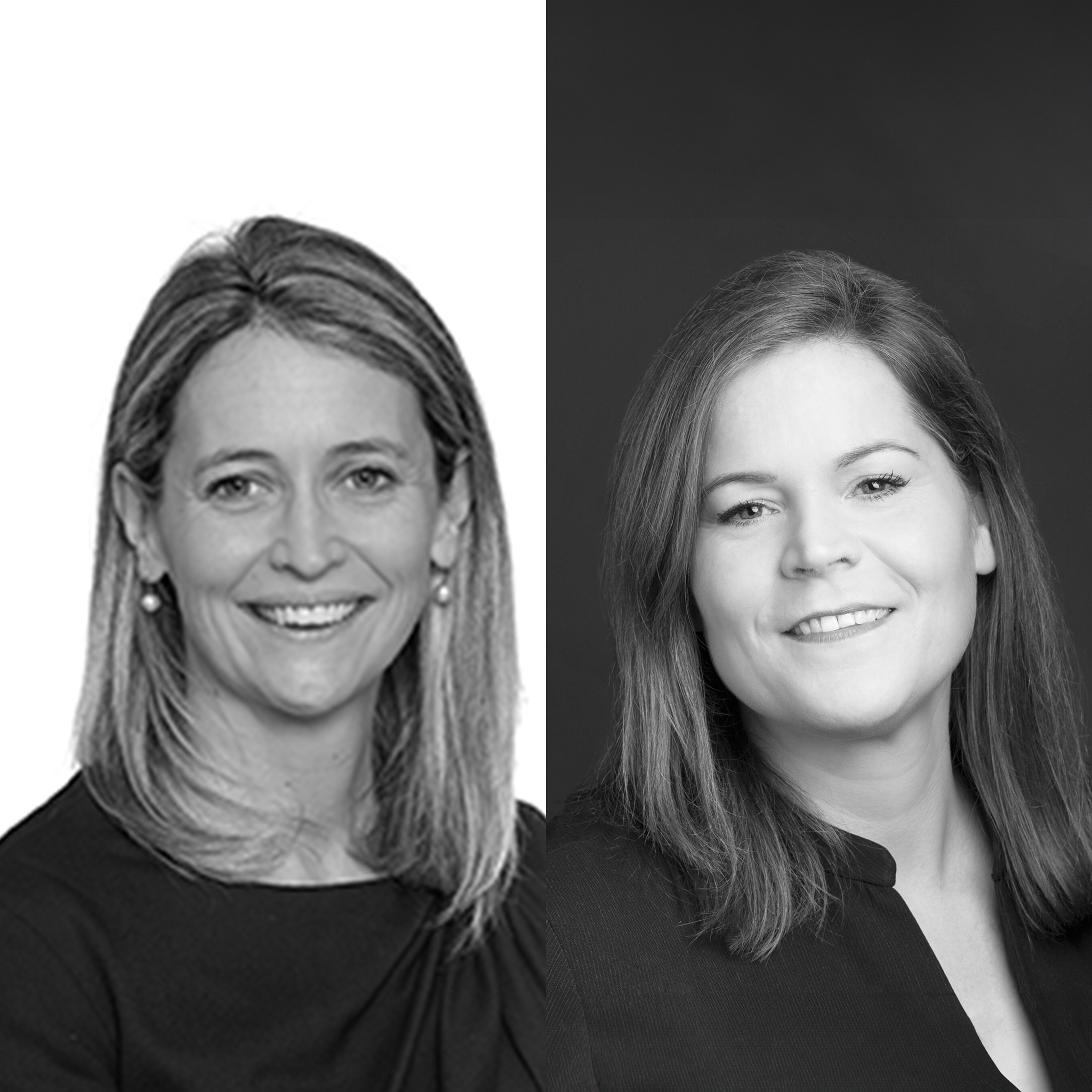
As Global Senior Partner, Sinéad and Arabella are responsible for the long-term strategic development of Perrett Laver alongside the acceleration of its commercial growth.
During her ten years at Perrett Laver, Sinéad established and led the firm’s operations in Amsterdam and Dublin, while continuing to grow Perrett Laver’s Research, Technology and Innovation, and Higher Education practices across Europe.
Sinéad’s experience at Perrett Laver includes advising on senior executive and non-executive appointments for universities, public and privately funded research institutes, as well as research-oriented charities and non-profits.
Arabella has been at Perrett Laver for over twelve years and was Global Head of the Social Impact and Environment Practice for 8 years. Arabella scaled and diversified Perrett Laver’s Social Impact and Environment Practice to become one of the leading advisors on leadership recruitment in the sector.
Arabella’s experience at Perrett Laver includes senior Chair, Board and Chief Executive appointments across the Social Impact and Environment Sector. This includes working with INGOs, Foundations, domestic non-profits, the UN, research institutes, social enterprises and at the intersection of the social impact and private sector.
Sinéad holds an honours degree in Natural Science from Trinity College Dublin and a PhD in Neuroscience from University College Cork.
Arabella holds an MA (Hons) in Ancient History from the University of Edinburgh and a PG Dip in Psychology at the Institute of Education, University of London.